
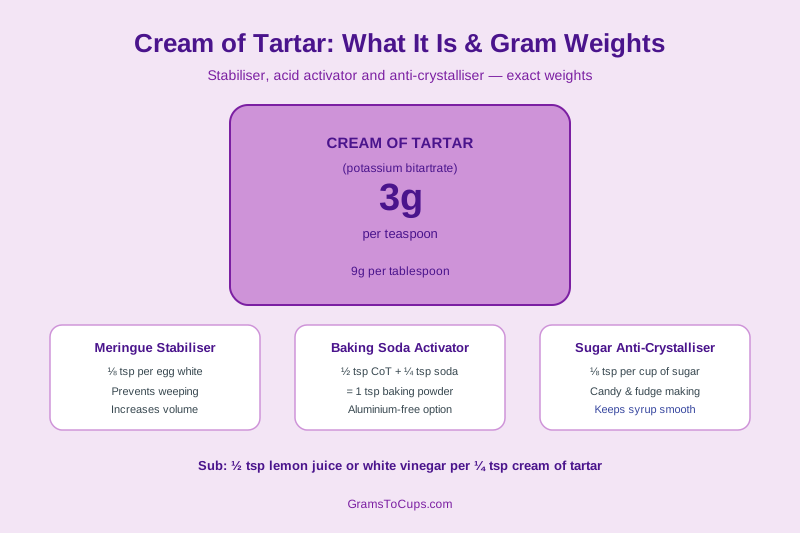
Cream of tartar (potassium bitartrate or potassium hydrogen tartrate) is a white, odourless, acidic powder with a surprisingly important role in baking. Despite appearing on ingredient lists in tiny quantities — often just ⅛ or ¼ teaspoon — it has a dramatic effect on the structure, stability and texture of meringues, candies, frostings and baked goods. Its gram weight per teaspoon is critical to measure correctly.
What Is Cream of Tartar?
Cream of tartar is a natural byproduct of winemaking. As grape juice ferments into wine, tartaric acid (naturally present in grapes) forms potassium bitartrate crystals on the inside of wine barrels and in bottles. These crystals are collected, purified and ground into the fine white powder sold as cream of tartar. It has nothing to do with cream — the name comes from the old scientific term for tartaric acid derivatives.
Cream of Tartar Gram Weights
| Quantity | Weight (g) |
|---|---|
| 1 teaspoon | 3g |
| ½ teaspoon | 1.5g |
| ¼ teaspoon | 0.75g |
| ⅛ teaspoon | 0.375g |
| 1 tablespoon | 9g |
| 1 cup | 144g |
Given that cream of tartar is usually used in quantities of ⅛–1 teaspoon, a scale with 0.1g resolution (a jewellery scale or precise kitchen scale) is needed to weigh it accurately. For home baking purposes, measuring by teaspoon is perfectly acceptable — the important thing is to level the teaspoon precisely.
Use 1: Stabilising Meringue and Whipped Egg Whites
This is cream of tartar's most important role in baking. When egg whites are beaten, the proteins unfold and form a foam network that traps air. This foam is inherently unstable — it collapses as the proteins denature and liquid "weeps" from the meringue. Cream of tartar prevents this by:
- Lowering the pH of the egg white foam, making the proteins less likely to over-coagulate
- Increasing the stability of the protein network, allowing the foam to hold its shape longer
- Producing a whiter meringue with larger, more stable air bubbles
Standard ratio: ⅛ teaspoon (0.375g) cream of tartar per egg white. Add before starting to whip. The difference in stability is dramatic — cream of tartar meringues hold their peak for hours; without it, they begin to weep within 30–60 minutes.
Use 2: Activating Baking Soda to Make Baking Powder
Baking powder is a mixture of baking soda (a base) and cream of tartar (an acid) in a ratio of approximately 1:2 by weight. You can make your own aluminium-free baking powder:
- Homemade baking powder: ¼ tsp baking soda (1.2g) + ½ tsp cream of tartar (1.5g) = 1 tsp baking powder equivalent
Commercial baking powder also contains cornstarch (to absorb moisture and prevent premature reaction). Homemade baking powder works immediately without the "double-acting" delay of commercial baking powder — your batter must go into the oven quickly after mixing. See our leavening ratios guide for more detail.
Use 3: Preventing Sugar Crystallisation in Candy and Frosting
When making caramel, fudge, candied nuts and boiled icings, dissolved sugar can suddenly recrystallise (seize up into a grainy mass) if any stray sugar crystals are present. Cream of tartar prevents this by breaking some of the sucrose molecules into glucose and fructose through acidic hydrolysis — these different sugar types don't crystallise together as easily. Standard ratio: ⅛ teaspoon (0.375g) per cup of sugar (200g) added to the sugar syrup before cooking.
Cream of tartar also keeps buttercream frosting smooth and bright white. Add ⅛–¼ teaspoon per batch of American buttercream to prevent the characteristic greasy separation that can occur when the butter and sugar don't fully emulsify.
Cream of Tartar Substitutes
| Instead of ¼ tsp cream of tartar (0.75g), use: | For meringue? | Notes |
|---|---|---|
| ½ tsp lemon juice (2.5ml) | Yes | Works well, slight lemon flavour |
| ½ tsp white vinegar (2.5ml) | Yes | Slightly less effective but good |
| Equal volume baking powder (as soda activator) | No | Only for leavening, not stabilising |
Frequently Asked Questions
How many grams is 1 teaspoon of cream of tartar?
One teaspoon of cream of tartar weighs approximately 3 grams. Half a teaspoon weighs 1.5g, and ¼ teaspoon weighs 0.75g. Because cream of tartar is used in very small quantities, even small measurement errors (a slightly heaped vs levelled teaspoon) can be significant. For baking, always level teaspoon measures with the back of a knife rather than packing or heaping them.
Can I leave out cream of tartar from meringue?
You can, but your meringue will be less stable and more prone to weeping (liquid forming at the base). Without cream of tartar: whip the egg whites slightly longer to achieve maximum volume, use immediately without delays, and avoid making meringue on humid days. If you have lemon juice available, add ½ teaspoon per egg white as a substitute — the acidic effect is similar to cream of tartar, though not quite as powerful. For baked meringues (pavlova, meringue kisses), adding cream of tartar or substitute is highly recommended.
What happens if I add too much cream of tartar?
Too much cream of tartar (more than double the recommended amount) can make meringues taste slightly metallic or acidic. In frosting, excess can cause a slightly sour flavour note. In candy making, using too much can prevent the sugar from setting properly by inverting too much sucrose to fructose and glucose. For home baking at standard recipe quantities (⅛–½ teaspoon), it's very difficult to add "too much" — the effect is subtle even at 2× the recipe amount.
What is the difference between cream of tartar and tartaric acid?
Cream of tartar (potassium bitartrate) is the potassium salt of tartaric acid. Tartaric acid is the pure acid form. Tartaric acid is about twice as acidic as cream of tartar and is primarily used commercially in food production and winemaking. For home baking, cream of tartar is the standard form — tartaric acid is too potent for typical home baker applications. You may occasionally see tartaric acid called for in professional pastry or candy making recipes.
Does cream of tartar expire?
Cream of tartar doesn't truly expire — it's a stable acid salt that doesn't break down over time under normal storage conditions. However, it can lose potency if it absorbs moisture (which causes it to clump and can partially inactivate it). Store in an airtight container in a cool, dry place. To test if old cream of tartar is still active: add ¼ teaspoon to a tablespoon of hot water — if it fizzes or produces a slight acidic taste, it's still good. Most cream of tartar remains effective for 3–4 years if stored properly.
Can cream of tartar be used for cleaning?
Yes — cream of tartar mixed with vinegar or lemon juice creates a mild acidic paste excellent for removing rust stains, cleaning stainless steel, brightening aluminium and removing discolouration from copper pots. For kitchen cleaning: mix 1 tablespoon cream of tartar with enough lemon juice to form a paste, apply to stained surfaces, leave 5 minutes, then scrub and rinse. This is a common non-toxic alternative to harsh chemical cleaners for kitchen equipment.