
Molasses is one of baking's most characterful ingredients — the dark, sticky byproduct of sugar refining that gives gingerbread its depth, pumpernickel its colour, Boston baked beans their richness and brown sugar its signature flavour. Yet many home bakers are uncertain about the different types of molasses, how to measure them precisely by weight and when to use each one. This guide covers everything you need to know.
What Is Molasses?
Molasses is produced during the refining of sugar cane or sugar beet. When the juice is extracted from the plant and boiled, sugar crystals form. The remaining liquid — rich in minerals, colour and flavour but no longer able to crystallise efficiently — is molasses. Each successive boiling extracts more sugar crystals and produces a progressively darker, more bitter, more mineral-rich molasses. This is why the three types (light, dark, blackstrap) differ so dramatically in flavour despite looking similar.
Molasses Types and Gram Weights
| Type | 1 Cup (g) | 1 Tbsp (g) | 1 Tsp (g) | Flavour | Best Use |
|---|---|---|---|---|---|
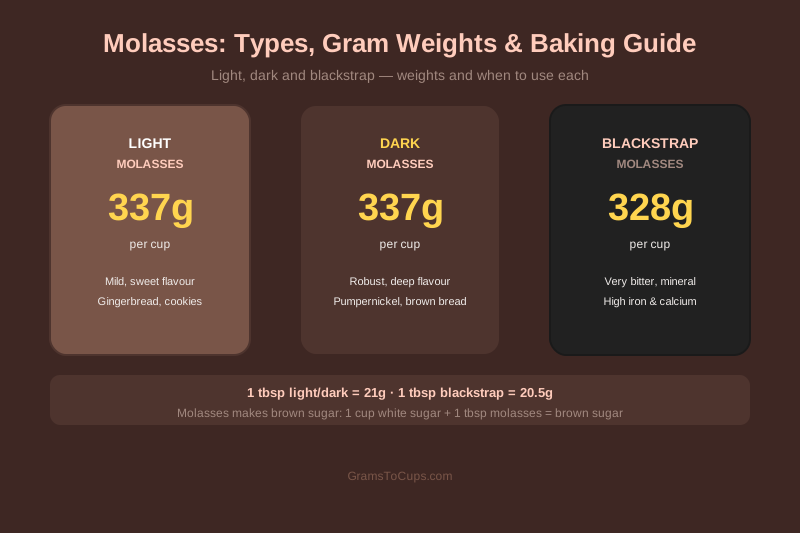
| Light molasses (1st boiling) | 337g | 21g | 7g | Mild, caramel-sweet | Gingerbread, cookies, glazes |
| Dark molasses (2nd boiling) | 337g | 21g | 7g | Robust, slightly bitter | Brown bread, baked beans, gingercake |
| Blackstrap (3rd boiling) | 328g | 20.5g | 6.8g | Very bitter, mineral | Nutritional supplement, health food |
| Treacle (UK equivalent) | 340g | 21.3g | 7.1g | Similar to dark molasses | Parkin, gingerbread, toffee |
| Golden syrup (lighter UK) | 340g | 21.3g | 7.1g | Mild caramel | Flapjacks, tray bakes, puddings |
How Molasses Makes Brown Sugar
This is one of the most useful things to understand about molasses — commercially produced brown sugar is simply white granulated sugar with molasses added back. The ratio:
- Light brown sugar: 1 cup white sugar (200g) + 1 tablespoon molasses (21g) → mix until uniform
- Dark brown sugar: 1 cup white sugar (200g) + 2 tablespoons molasses (42g) → mix until uniform
This means if you run out of brown sugar mid-recipe, you can make it instantly. It also means you can control the molasses level — some bakers prefer a higher molasses content in dark recipes for more complex flavour. See our brown sugar packing guide for weight differences between packed and loose brown sugar.
Using Molasses in Baking
Molasses contributes several things to baked goods beyond flavour:
- Moisture: molasses is hygroscopic (absorbs water from the air), keeping baked goods moist and extending their shelf life. Gingerbread gets better over 2–3 days as the moisture redistributes.
- Colour: the dark pigments in molasses give pumpernickel, dark rye bread and gingerbread their characteristic deep brown colour.
- Acidity: molasses is acidic (pH 5–6). In recipes using baking soda, the acid in molasses reacts with the soda to produce CO₂ for leavening. This is why traditional gingerbread uses baking soda, not baking powder.
- Flavour complexity: the mineral content and complex sugar compounds in molasses add a depth of flavour that pure sugar cannot replicate — iron, calcium, potassium and complex Maillard compounds.
Blackstrap molasses has significantly higher mineral content than light or dark molasses — it contains about 20% of the daily recommended value of iron, calcium and magnesium per tablespoon. However, its extremely bitter flavour makes it unsuitable for most baking recipes. Use it medicinally or in very small quantities (1 teaspoon) blended into smoothies or oatmeal.
Substituting Molasses
| Instead of 1 tbsp molasses (21g), use: | Weight | Notes |
|---|---|---|
| Dark treacle (UK) | 21g | Almost identical — 1:1 |
| Dark brown sugar + water | 15g sugar + 5ml water | Less intense flavour |
| Honey or maple syrup | 21g | Sweeter, different flavour |
| Date syrup | 21g | Closest to molasses in complexity |
| Pomegranate molasses | 21g | Tarter, fruity — use with caution |
For more on liquid sweetener weights including maple syrup and honey, see our maple syrup vs honey guide.
Frequently Asked Questions
How many grams is 1 tablespoon of molasses?
One tablespoon of light or dark molasses weighs approximately 21 grams. Blackstrap molasses weighs slightly less at 20.5g per tablespoon due to slightly lower density. Molasses is one of the heaviest liquid baking ingredients (along with honey and golden syrup), significantly heavier than water (15g/tbsp) because of its extremely high sugar and mineral content.
Can I substitute blackstrap molasses for regular molasses?
Only in small amounts and with caution. Blackstrap molasses is significantly more bitter and intense than light or dark molasses — using it as a 1:1 replacement will make your baked goods noticeably more bitter and less sweet. If substituting: use only half the quantity and taste the batter before baking. For most recipes, regular (dark) molasses is the correct choice. Blackstrap is primarily used as a nutritional supplement, not as a baking ingredient.
Why do some gingerbread recipes use baking soda instead of baking powder?
Because molasses is acidic (pH 5–6) and baking soda requires an acid to activate. Baking soda (pure sodium bicarbonate) reacts with the acid in molasses to produce CO₂, which leavens the dough. This is the traditional leavening system in gingerbread, Boston brown bread and other molasses-heavy recipes. Baking powder contains its own acid (cream of tartar or sodium acid pyrophosphate) and doesn't depend on molasses acidity, but it produces a less pronounced rise and slightly different crumb texture in molasses-heavy recipes.
What is the difference between molasses and treacle?
In the UK and Commonwealth countries, "treacle" is the equivalent term for molasses: black treacle = dark molasses; light treacle = a lighter, more refined version sometimes called "golden syrup." Golden syrup is not the same as any US molasses type — it's a much lighter, more refined product with a caramel flavour and almost no bitterness. When a UK recipe calls for "black treacle," use US dark molasses as a 1:1 substitute by weight.
How do I measure molasses without it sticking everywhere?
Three methods work well: (1) Weigh it — pour directly onto a tared scale into your mixing bowl, using a spatula to scrape every last gram; (2) Spray your measuring spoon with cooking spray before adding molasses — it slides out cleanly; (3) Heat briefly — 5–10 seconds in a microwave at full power makes molasses flow much more easily. Always weigh molasses by gram for precision — its thick consistency makes volume measurement particularly inaccurate.
Does molasses expire?
Molasses has a very long shelf life due to its high sugar content, which inhibits bacterial growth. Unopened, commercially produced molasses lasts 5–10 years at room temperature, often well past its "best by" date. Once opened, it lasts 1–2 years in a sealed container. Signs of spoilage: mould (discard), fermented smell (discard), or significant crystallisation (which can be dissolved by warming gently). Store in a cool, dark location — refrigeration is not necessary but extends flavour quality.