
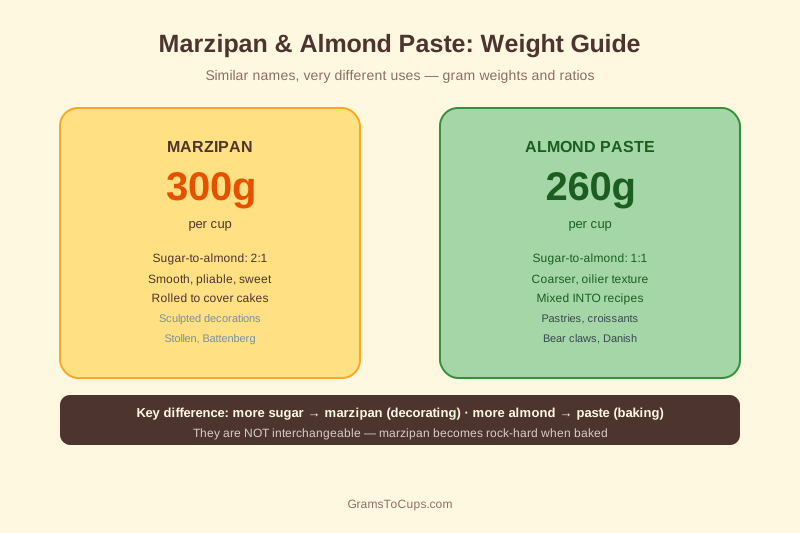
Marzipan and almond paste are two of the most confusingly similar ingredients in baking. Both are made from ground almonds and sugar. Both look pale and paste-like. Both smell intensely of almond. Yet using one where the other is called for produces very different results — marzipan becomes rock-hard and dry when baked inside pastry, while almond paste doesn't have the smooth, pliable texture needed for rolling and decorating. Understanding the precise difference (and gram weights) of each is the key to success in European pastry.
The Fundamental Difference: Sugar Ratio
The distinction between marzipan and almond paste comes down entirely to the ratio of sugar to ground almonds:
- Almond paste: roughly 1 part sugar to 1 part almond flour by weight. Higher almond content makes it coarser, oilier and more intensely almond-flavoured. Less sweet, more malleable when warm.
- Marzipan: roughly 2 parts sugar to 1 part almond flour by weight. Higher sugar content makes it smoother, sweeter, stiffer when cold and more pliable when kneaded. The high sugar content also makes it excellent for modelling and decorating — it holds its shape after drying.
Gram Weights
| Product | 1 Cup (g) | 100g | 1 Tbsp (g) | Standard Package (US) |
|---|---|---|---|---|
| Marzipan | 300g | — | 18.75g | 198g (7 oz) or 400g (14 oz) |
| Almond paste | 260g | — | 16.25g | 198g (7 oz) |
| Frangipane (almond cream) | 225g | — | 14.1g | Made fresh |
When to Use Marzipan
Marzipan's high sugar content gives it a smooth, clay-like texture that can be rolled thin, cut into shapes, moulded and painted. It is the preferred confection for:
- Covering cakes: a layer of marzipan is applied over a Christmas or celebration cake before royal icing — it provides a smooth, flat base and seals in moisture.
- Modelled decorations: fruits, animals, flowers and figurines made from coloured marzipan. It dries to a firm surface that holds detail well.
- Stollen: the classic German Christmas bread traditionally contains a log of marzipan baked in the centre.
- Battenberg cake: the pink and yellow chequerboard cake covered in marzipan.
- Chocolate-dipped marzipan: the classic German Lübecker Marzipan dipped in dark chocolate.
When to Use Almond Paste
Almond paste's lower sugar and higher almond content mean it has more flavour intensity and a coarser texture. It softens and integrates into pastry as it bakes, rather than staying firm. It is the correct ingredient for:
- Bear claws and almond croissants: the almond filling inside these Danish pastries is almond paste, often mixed with butter and eggs to make frangipane.
- Almond tarts: the filling inside a classic tarte aux amandes or Bakewell tart is frangipane — made from almond paste or ground almonds mixed with butter, eggs and sugar.
- Almond ring cake: almond paste is kneaded into the dough of Danish ring cakes and coffee cakes.
- Homemade almond filling: almond paste can be mixed with butter and egg to make a rich filling for any pastry or cake.
Never use marzipan where almond paste is called for in a baked filling. When baked, marzipan's high sugar content causes it to harden and sometimes burn. Marzipan is designed to be used raw or as a covering, not baked inside pastry. Almond paste remains moist and chewy after baking because its lower sugar ratio prevents excessive hardening.
Frangipane: The Third Almond Product
Frangipane is almond cream — a mixture of almond paste or ground almonds with butter, eggs and sugar, baked into tarts and pastries. It is not a shelf product but a made-to-order preparation. Approximate recipe: 100g almond paste + 100g butter + 100g sugar + 2 eggs. Frangipane is the filling in Bakewell tarts, French galettes des rois and countless other almond pastries. See our almond flour guide for weights of ground almonds used in frangipane.
Frequently Asked Questions
Can I substitute marzipan for almond paste in baking?
No — not without significant adjustment. Marzipan has twice the sugar of almond paste and will harden, potentially burn and taste overly sweet when baked inside pastry. If almond paste is unavailable, make your own: blend 100g blanched almond flour + 100g icing sugar + 1 egg white + ½ tsp almond extract until a smooth paste forms. This is a close approximation of commercial almond paste. You can also use an equal weight of homemade marzipan thinned with 1–2 tablespoons of water and an extra tablespoon of ground almonds to reduce the sugar concentration.
How do I soften hard marzipan?
Marzipan hardens when it dries out or is stored cold. To soften: (1) Microwave: place in a microwave-safe bowl and heat in 10-second bursts at 50% power, kneading between each, until pliable; (2) Warm hands: knead vigorously with warm hands for 2–3 minutes — the heat and friction soften the sugar and almond oil; (3) Knead in glucose syrup: add ½–1 teaspoon of liquid glucose or corn syrup and knead in to restore pliability. Very hard, cracked marzipan can be broken into pieces and processed in a food processor until it comes together again.
What does marzipan taste like and why do some people dislike it?
Marzipan has an intensely sweet flavour with a strong almond note that comes primarily from benzaldehyde — the same compound responsible for "cherry" and "almond" flavours. Much of the flavour in marzipan comes from bitter almonds or almond extract (which contains benzaldehyde synthetically or from stone fruit pits). Some people find this flavour overwhelming or artificial-tasting; others love it. Quality marzipan made from high percentages of real almonds (50%+) has a more complex, less chemical flavour than cheaper versions made with sugar and small amounts of almond flavouring.
How long does marzipan last?
Unopened commercial marzipan lasts 12–24 months at room temperature (the high sugar content preserves it). Once opened or homemade: wrap tightly in cling film, then place in an airtight container. Store at room temperature for up to 1 month (in cool weather) or refrigerate for 3–6 months. Homemade marzipan made with raw egg white should be refrigerated and used within 2 weeks. Freeze for up to 6 months — wrap in cling film then foil, thaw overnight in the refrigerator before using.
How do I make marzipan at home?
Homemade marzipan: (1) Combine 200g blanched almond flour, 200g icing (powdered) sugar and ½ tsp almond extract in a food processor. (2) Add 1 tablespoon of corn syrup (or glucose syrup) and pulse until combined. (3) Add egg white one teaspoon at a time, pulsing after each addition, until the mixture just comes together into a smooth, pliable paste — you may need 1–3 teaspoons total. (4) Knead briefly on a surface dusted with icing sugar. Use immediately or wrap tightly and refrigerate for up to 2 weeks. This yields approximately 420g of marzipan.
Why does marzipan sometimes have a green tinge?
Commercial marzipan is often tinted a very pale yellow or left white. The green tinge seen in some marzipan (particularly in traditional European marzipan like Lübecker Marzipan) comes from the inclusion of pistachio paste in some recipes, or from chlorophyll that leaches from the almond skin when almonds with skin are used. Most high-quality marzipan is made from blanched almonds and is uniformly pale cream-coloured. Green marzipan is most commonly seen as a deliberate decoration (modelled fruits, Simnel cake top decoration) using food colouring.