
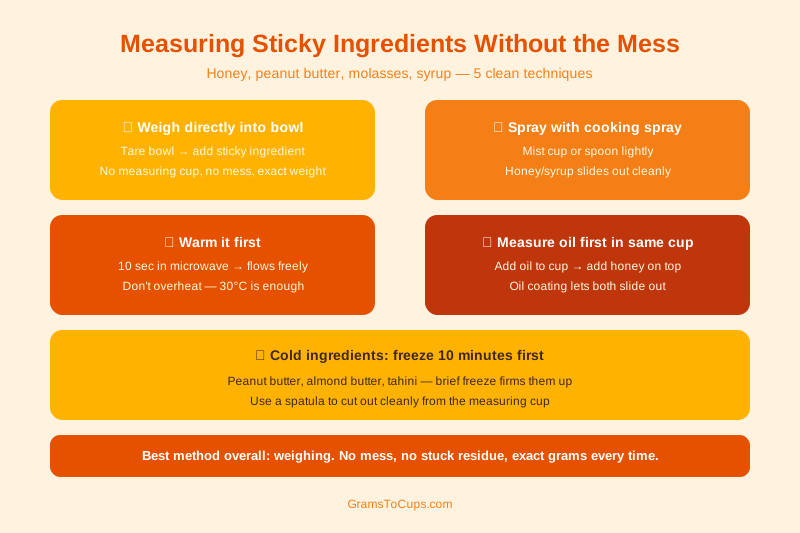
Sticky baking ingredients — honey, maple syrup, molasses, peanut butter, tahini, golden syrup, corn syrup, almond butter — are notoriously difficult to measure accurately. They cling to measuring cups and spoons, never fully release, and leave a gluey residue that's time-consuming to clean. Beyond the mess, the residue left behind after pouring means you're systematically under-measuring these ingredients. This guide covers five proven techniques for measuring sticky ingredients accurately, cleanly and efficiently.
The Measurement Problem with Sticky Ingredients
The issue goes beyond convenience. Consider a recipe calling for ¼ cup (85g) of honey. If you measure by cup and a tablespoon of honey (21g) remains stuck to the cup and not added to your recipe, you've added 25% less honey than called for — a significant shortfall in a sauce or glaze recipe where honey is the primary sweetener. This systematic under-measurement is one of the most common (and least recognised) sources of recipe failure.
Sticky Ingredient Gram Weights Quick Reference
| Ingredient | 1 Cup (g) | 1 Tbsp (g) | 1 Tsp (g) |
|---|---|---|---|
| Honey | 339g | 21g | 7g |
| Maple syrup | 322g | 20g | 6.7g |
| Molasses (dark) | 337g | 21g | 7g |
| Golden syrup | 340g | 21.3g | 7.1g |
| Corn syrup | 328g | 20.5g | 6.8g |
| Agave nectar | 336g | 21g | 7g |
| Peanut butter (smooth) | 258g | 16.1g | 5.4g |
| Almond butter | 250g | 15.6g | 5.2g |
| Tahini (sesame paste) | 240g | 15g | 5g |
| Cream cheese | 232g | 14.5g | 4.8g |
Technique 1: Weigh Directly Into the Mixing Bowl (Best Method)
This is by far the most accurate, cleanest and fastest method for measuring any sticky ingredient. Place your mixing bowl on the scale, press tare to zero, then slowly pour or spoon the sticky ingredient directly from its container into the bowl until you reach the target weight. Use a silicone spatula to scrape every last gram from the spoon into the bowl. No cup to clean, no residue left behind, exact weight every time.
This method also eliminates every other difficulty with sticky ingredients — temperature doesn't matter (thick honey at cold temperature is fine to weigh), viscosity doesn't matter and container size doesn't matter. See our weight-based baking guide for more reasons to bake by grams.
Technique 2: Cooking Spray Coating
A light mist of cooking spray (non-stick spray) on the inside of a measuring cup or spoon before adding a sticky ingredient allows it to slide out cleanly and completely. The thin layer of oil between the sticky ingredient and the measuring cup surface prevents adhesion. This works particularly well for honey, maple syrup, golden syrup and molasses — the entire measured amount slides out in one clean pour. Use an unflavoured spray to avoid transferring flavour to delicate recipes.
Technique 3: Warm It First
Cold temperatures dramatically increase the viscosity of honey, molasses and nut butters. A brief warming session reduces viscosity enough to make pouring and measuring much easier:
- Honey: 10 seconds in the microwave at full power (in a glass or microwave-safe container) reduces viscosity dramatically
- Peanut butter / almond butter: 15–20 seconds at full power until pourable
- Molasses / golden syrup: 10 seconds makes a significant difference
Do not heat beyond 40–50°C — excessively hot honey loses some of its beneficial enzymes and can alter flavour. Use brief bursts and check after each.
Technique 4: Use the Oil-First Method for Mixed Recipes
If your recipe contains both oil and a sticky liquid (a granola bar recipe with oil and honey, for example), measure the oil first into your measuring cup. Then add the sticky ingredient — the oil coating prevents it from sticking. Both pour out together cleanly. This works only when both ingredients are in the recipe and compatible.
Technique 5: Chill Thick Pastes Before Measuring
For very thick pastes like almond butter, tahini or cream cheese, brief chilling (10–15 minutes in the freezer) firms them up slightly, making them easier to cut out of a measuring cup with a spatula in one clean piece rather than scraping endless small amounts. Use a spatula dampened with water to cut and release the chilled paste cleanly.
For peanut butter specifically: always stir natural peanut butter thoroughly before measuring — the oil separates to the top, meaning the bottom of the jar is drier than the top. Unstirred peanut butter gives inconsistent results. Store natural peanut butter upside down to prevent separation, or mix and refrigerate to keep it uniform. See our peanut butter weight guide for more details.
When to Use Which Technique
| Ingredient | Best Technique | Why |
|---|---|---|
| Honey (large quantity) | Weigh or warm first | Warm honey pours cleanly; weighing is most precise |
| Honey (small, 1 tsp) | Spray the spoon | Quick for small amounts |
| Maple syrup | Weigh or spray | Thinner than honey — spray works well |
| Molasses / golden syrup | Warm or spray | Very thick and dark — warming transforms poured viscosity |
| Peanut butter | Weigh directly | Stir first, weigh in bowl — most accurate |
| Tahini / almond butter | Weigh directly | Separates easily — weigh after stirring |
| Cream cheese | Weigh at room temperature | Soft cream cheese releases cleanly from a spatula |
Frequently Asked Questions
How do I measure 1 tablespoon of peanut butter accurately?
The most accurate method: place a bowl on your scale, tare to zero, then scoop peanut butter into the bowl until the scale reads 16 grams (1 tablespoon). Use a spatula to help portion cleanly. If using a measuring spoon: spray the spoon lightly with cooking spray, fill level (not heaped) with peanut butter, then use the spatula to release it. Always stir natural peanut butter before measuring to ensure consistent fat-to-solid ratio throughout the jar.
Can I use the same measuring cup for oil and then honey?
Yes — this is actually the recommended method when both are in the recipe. Measure the oil first (it leaves a thin coating on the cup's interior), then add the honey (which slides against the oil coating and releases cleanly). Both pour out together without sticking. This saves cleaning a sticky cup and reduces waste. The same technique works with oil followed by molasses, maple syrup, tahini or any other sticky ingredient.
How do I clean a sticky measuring cup without wasting water?
Several approaches work well: (1) Fill with hot water and let soak for 2 minutes — sugar syrups dissolve completely in hot water; (2) Rinse immediately with the hottest tap water available before the residue dries; (3) Use a silicone spatula to scrape out maximum residue before washing; (4) For stubborn honey or syrup, fill with boiling water, wait 1 minute, pour out — the cup will be almost clean. Dried honey or syrup is significantly harder to clean than fresh residue.
How do I measure tahini accurately?
Tahini (sesame paste) separates dramatically — oil rises to the top, leaving dry, compacted sesame paste at the bottom. Always stir tahini thoroughly until uniform before measuring. Then weigh directly: 1 tablespoon of well-stirred tahini = 15g; ¼ cup = 60g. If using a measuring cup, spray with cooking spray first. Note that bottom-of-jar tahini and top-of-jar tahini have very different fat contents — weight measurement after stirring ensures consistent fat-to-solid ratios in your recipe.
Does warming honey in the microwave damage it?
Brief warming (10–15 seconds to reach 35–45°C) does not significantly damage honey's beneficial enzymes or flavour. Extended heating above 70°C destroys some of honey's beneficial enzymes (particularly diastase and invertase) and can produce HMF (hydroxymethylfurfural), which slightly alters flavour. For the purposes of baking measurement: 10 seconds to make it pourable is completely harmless. The baking process itself (160–180°C oven) destroys enzyme activity anyway, so the warming step for measurement has no practical impact on baked goods.
How do I measure coconut oil when it's solid vs liquid?
Coconut oil is liquid above 24°C and solid below — and the same weight can look very different in a cup depending on temperature. Always measure coconut oil by weight: 1 cup = 218g whether solid or liquid. If a recipe says "1 cup coconut oil, melted" — melt it first then weigh 218g. If it says "1 cup coconut oil, solid" — spoon 218g of solid coconut oil into the bowl. Never measure by volume when the ingredient can change state, as the packing density changes dramatically between solid and liquid states.